

Summary
“Crypto30x.com catfish” is one of the crypto scam scams that deploying the scammer funny profiles, knock off domains, or imposters are trying to lure folks into handing over cash, promising they‘ll be able to recoup it in our reputation bin. This post tells you the meaning, the composition, the warning signs, and actions to take towards realizing this.
Table of Contents
The Meaning of “Crypto30x.com Catfish”
If you‘ve Googled this phrase, it‘s most likely because you‘re trying to figure out something you saw in some form of advertising, Facebook message or unsolicited chat from someone claiming to be a “crypto expert”. Your instincts are correct.
If you need to define the term, then you have to take the two parts apart.
Crypto30x.com is a cryptocurrency trading platform that is marketed on the basis that it allows for high-leverage trading up to 30x leverage and provides an AI-powered tool (called “Zeus”) that can assist users in staking on high-growth potential in digital assets markets. The platform proclaims to provide access to high returns as well as automated trading signals, appealing to novice and professional traders alike.
The word “catfish” is understood to have been used in this context to describe the act of creating a false online identity to deceive others, [latching] onto people‘s use of online dating. In the crypto space, however, it is used to describe a particular type of scam a scam whereby malicious actors assume the guise of a legitimate platform, representative or trader in order to gain the trust of their victim before disappearing with their money.
Taken together, “crypto30x.com catfish” refers to the process in which scammers utilize the title, visual identity, or overall idea of the platform, or the high-leverage crypto story more generally, to conduct several types of scams. These include fake sites imitating the actual platform, poser accounts on social media posing as representatives of the site, and unsolicited contact by alleged “trading mentors” who direct users to make deposits at sites they own.
It‘s become a well searched phrase simply because it hits on a very real trend that thousands of people have experienced and want to comprehend.
How the Catfish Scam Pattern Works
Crypto-catfish operations, like cell phone scams, are designed by established methods that using any name of the game as a ruse.
Stage 1:
Reach out and establish rapport The fraudster contacts their target through Facebook/Twitter/Instagram DM, Telegram, WhatsApp, dating apps or YouTube comment sections. They will generally make themselves out to be a successful investor, crypto mentor, or even a customer service rep. The interaction is initially friendly, helpful and personal; no request for money is made at first. This part of the process can take several days or longer.
Stage 2:
The “opportunity” is presented Once a good rapport has been built, the scammer will bring the scam in with the investment opportunity. This involves sharing the trader‘s “trading gains” (screenshots of big returns), namedropping the site (which makes it sound more legitimate), and offering to “help you get started”. Eventually this becomes links to what appears to be the real site (but is a clone that steals the money deposit and login details).
3:
Artificial profits Before victim institutes the money, false profits can be shown. The balances will increase on the monitor. Victim experiences pleasure and may make extra deposits. That is the effect with intention: the scammer‘s target is the maximization of the sums he can steal before leaving.
Stage 4:
Withdrawal blocked When attempting to withdraw the funds, trouble starts. Popular excuses are that it has to be paid a “tax” or “fee” first, “there‘s an error in the system”, demand for identity verification that is refused again and again or “ghosting”. The platform then becomes unavailable and the funds are gone.
Step 5:
The secondary scam (recovery fraud): Apart from a refund scam like we just saw, some victims are targeted again by fraudsters who pretend to be lawyers, regulators or recovery firms, and promise they will get your money back for an advance payment. This is a second scam on top of the previous one.
This pattern is consistent across any platform name. It is the matter of the method being used which can be called ‘catfish’ (or whatever you prefer to call it). The method has been used with dozens of different platform names.
Why Crypto Catfish Scams Are So Effective in 2026
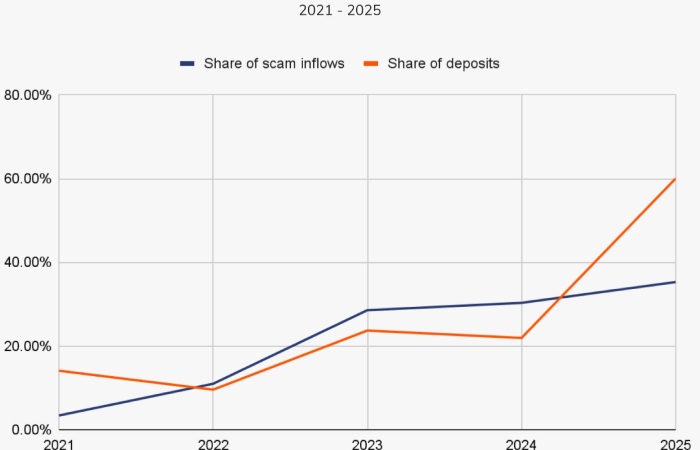
The scale of the problem is huge. The FBI released its 2025 Internet Crime Report in April 2026, which found Americans reported losses of more than $11 billion due to cryptocurrency scams in 2025. This was a 22% rise on the previous year, representing more than half of all internet crime losses reported to the agency. Investment scams were the single largest fraud category at $7.2 billion in losses, with a focus on false crypto platforms.
Coin Desk reporting on the FBI data mentions that 181,565 complaints were made in 2015 around the use of cryptocurrency , with an average loss of $62,604 per victim. Almost 19,000 people lost more than $100,000. Life-changing sums of money taken via schemes that leverage psychological tricks, made-up time pressure and semblance of legitimacy.
Several factors make these scams particularly effective right now:
Crypto‘s complicated by nature. A lot of people may know about Bitcoin or that crypto can be profitable. But they don‘t know how to leverage, they don‘t know that a legitimate trading site looks a certain way, and they don‘t know how to check a site‘s regulatory status. That‘s the edge exploited here.
Deception facilitated by AI. That same report from the Federal Bureau of Investigation in 2025 found that more and more scammers are deploying AI writing assistants to create authentic-sounding messages, fabricated testimonials, duplicated voices, and deepfake videos all of which make applying the usual warning signs, such as grammatical errors and boilerplate language, much more difficult.
Social proof factories. Fake testimonials, bogus profits screen-shots, bot pumped social media stats and scripted YouTube “reviews” generate a lie community and credibility for the scams.
Crypto‘s irreversibility. Unlike bank transfer which may be reversed crypto is permanent. Once money has been transferred to a scammer wallet it is very difficult to get it back. This is one of the incentives for making crypto the most popular payment method for fraudsters.
Red Flags That Signal a Crypto Catfish Scheme
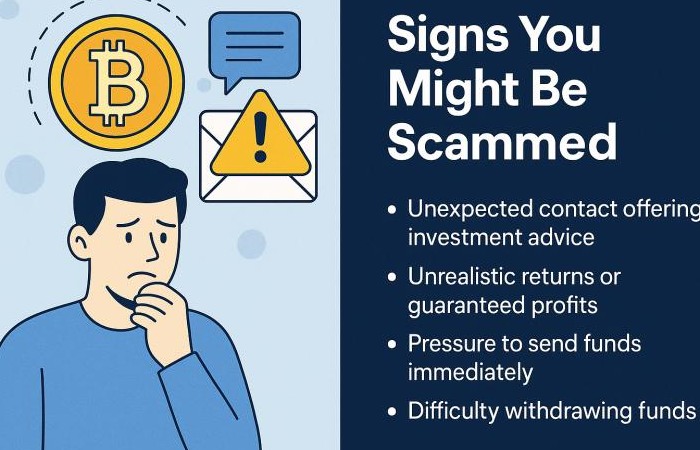
These warnings have been seen time and time again in every single crypto catfish we‘ve come across. Should you see any of these combinations of warning signs, do nothing and check before you do anything.
Promising high profits with unclear risk warnings No real investment platform will guarantee you profits. “30x in a matter of days” or “become a millionaire in no time” are sales slogans used to excite you and avoid conscious calculation. Real crypto trading is risky and no professional platform will deny it.
Anonymity and absence of company information Authentic exchanges Binance, Coinbase, Kraken have their teams, registered company names, regulators, and physical addresses openly available. If the “About” page is sparse, the ownership is not transparent, and WHOIS listings reveal offshore privacy protection, these are big red flags.
No verifiable regulatory registration Search the name of any trading platform on the registries of the FTSE-registered SEC (U.S.), the FCA (U.K.), ASIC (Australia), the CySEC (Cyprus), the MAS (Singapore). Any trading platform that cannot be found on any of these registries or is only purported to be registered in a jurisdiction that lacks regulatory authority for investors warrants suspicion.
Unsolicited outreach from “mentors” or “insiders” Authentic trading apps and companies do not message you directly on dating apps, Telegram, or social media DMs saying “Hi, I want to show you my system.” If a stranger leads the conversation onto crypto investment, assume it‘s a scam or scammer until convinced otherwise.
Pressure and false time constraint “This offer closes in 48 hours.” “Only 3 spots left in our VIP group.” “You need to deposit now to lock in this price.” You are flooded with reasons not to think properly or seek a second opinion. honest investment opportunities don‘t vanish in 48 hours.
Withdrawing. If you‘ve placed money on deposit and now withdrawal is demanding payment of a “tax”, “fee“or an “insurance premium” these are not terms that the platform demands. They are plundering ploys. Stop. Do not pay any more.
Fake reviews and script videos Search for the trading platforms reviews on forums such as Reddit, Trustpilot, BitcoinTalk before engaging with. If the majority of positive reviews are recent, generic and share common wording or if the YouTube reviews videos all feature the same scripts and stock footage, you are looking at credibility signals not user feedback.
What to Do If You‘ve Already Been Targeted
If you have transferred money to a site you now think was a scam, there are a few things you should be doing right away:
Cease payment. After a time, the greatest scam is convincing the victim to send more money a (tax, fee or ‘security deposit’) to get the withdrawal released. This doesn‘t happen. Any further payments go to the same people who hold your money.
Save everything. Save or take screen shots of all your conversations, transactions, platform pages and emails or any information you may receive. You need this information when you make your report.
You could also report to your national authority. For example in the US report to IC3.gov (FBI‘s Internet Crime Complaint Center), in the UK report to Action Fraud or in Australia to Scamwatch. Agencies use this information to build up statistics, detect trends and sometimes freeze assets.
Reach out to your bank or payment provider ASAP. If you paid for a crypto transaction with a bank transfer, credit card, or payment app that was then sent to a scammer, your bank might be able to do a chargeback or put a hold on the transaction. Act fast there‘s a very limited timeframe.
Beware of “recovery agencies”. When preyed upon by scammers many others will contact you and claim to be lawyers or recovery specialists who can take your money and get back some or all of your funds. These are in the most part secondary scams and need to be avoided. Only employ a solicitors if you seek legal advice; only find them yourself using a reputable bars association list.
Have a chat with someone you trust. Its not only the money that suffers. Fraud really hurts emotionally as well. You don‘t have to handle it by yourself and there‘s no reason to be ashamed. The scammers are clever, they plan these things for the smartest of the bunch.
How to Verify Any Crypto Platform Before You Invest
Before depositing money on any trading platform, run through this checklist:
Verify regulatory registration. Search for the platform in the SEC (sec.gov), FCA (register.fca.org.uk), ASIC (asic.gov.au) or the financial regulatory agency of your country. It should be possible to locate a registered legitimate platform in your country.
Investigate user reviews. Use the name of the platform on Reddit (try searching for platform name + review on r/Scams and r/CryptoCurrency), Trustpilot, and Google with more search terms such as “withdrawal issues”, “review” or “scam”. A legitimate platform will have some genuine negative reviews, not just all five-star reviews.
Find a birth date for the domain. Utilize a WHOIS lookup engine to discover when the domain was established and what it resides on. Domains registered extremely recently by anonimity protected owners generally represent a greater threat.
Test the contact details. Use the support address before depositing. See if you can find a working phone number or live chat. If you find one, try it. Scammers normally have fake-looking contact pages that lead nowhere.
Questions they should be able to answer. Where is the company registered? Which country? What is the registration number? By whom are they regulated? A genuine firm will be able to answer these questions. Avoids or unclear answers should set alarm bells ringing.
Begin with an amount you can lose all of. If you choose to use a platform that you have no complete verification process, then begin with the lowest minimum amount possible. Try withdrawing before you deposit anything of value. Real sites make the withdrawal process easy, fake sites are difficult.
Frequently Asked Questions
What is “crypto30x.com catfish”?
It is a type of crypto scam scheme in which scammers (fake accounts, cloning sites or impersonator) using the name and branding of popular sites with high-leverage crypto trading to manipulate users to deposit funds where those funded assets will not be returned. The term “catfish” refers to being scammed by a liar or tricked by a fake site that misrepresents itself as legitimate and then disappears.
So is Crypto30x.com scam?
Crypto30x.com states on its website that it is a high leverage (x2000) cryptocurrency trading platform that utilises artificial intelligence tools. However, numerous reports raise red flags for potential scam and other issues, such as a lack of financial commission regulatory transparency, a lack of clear ownership and trust records, users reporting difficulty withdrawing, and no FCA or SEC licenses. While the platform itself may or may not be the scam, the platform name has been fiar to be used by other scammers as part of a catfishing campaign. Proceed with extreme caution.
If I was scammed can I get my money back?
A reason that scammers like to use cryptocurrency is that they usually are not able to be reversed. Recovery is possible in some cases it boils down to how fast you act and whether you contact your bank and police right away. Do not give any money to people who contact you asking to get your money back it‘s mainly another scam.
What can I do to verify a crypto platform?
It depends on your country but in general the platform needs to be registered with a major financial regulator, the reviews should be independent not platform promoted, withdrawals are functioning working test with a small amount to withdraw, and the company information should be publicly verifiable. Do not deposit if the above requirements are not satisfied.
How do crypto catfish scammers typically get in touch?
Telegram and WhatsApp are the most commonly used platforms. Other popular methods include social media DMs (Instagram, X/Twitter, Facebook), dating apps, and comment sections. Some scammers identify themselves as investors, trading coaches, or platform customer support.
Who is most vulnerable to crypto catfish scams?
According to data from the FBI, all age groups were affected, but in 2025, victims over 60 years of age reported the greatest financial losses at a total of $4.43 billion. The least financially vulnerable, then 20-somethings, new crypto investors, and those under financial strain are also the most targeted. Thisis not naively preying on people‘s lack of understanding of financial schemes, but rather manipulating their curiosity, desire to make money, and trust.
Where can I report a crypto scam?
In the US: to IC3.gov (FBI) and the FTC at ReportFraud.ftc.gov.In the UK: to Action Fraud at actionfraud.police.uk.In Australia: to Scamwatch at scamwatch.gov.au. In all cases, report swiftly early reports stand the greatest chance of effecting action.
Conclusion
‘Crypto30x.com catfish’ doesn‘t have quite the same ring to it as ‘drop bears in the outback’, but it doesn‘t have to. It‘s actually an example of one of the older forms of scams, which in 2025 alone cost Americans a staggering US$11 billion. And that is almost certainly a substantial underestimate by the time you read this. These scams aren‘t unsophisticated or blatantly fraudulent. They are carefully thought out activities run by professional groups who employ experts in the science of the mind, hijack the genuine enthusiasm for investing in crypto currencies and utilize ever more advanced technology to build confidence.
The most effective protection is not your skepticism about all crypto; it‘s your understanding of how these particular methods operate. Now you have that insight: unverifiable managerial speeches, promises of returns, withdrawal hurdles, unsolicited mentoring, and the cues that push people to act before they even think.
Official investing in digital assets occurs at reputable, regulated venues, transparent entities with knowable histories, truthful risk disclosures, and simple withdrawal procedures. Anything that strays from those criteria is ahead of being skeptical before receiving your investment.
If you have been compromised, report it. If you are still researching, go slow. The opportunity that disappears in 48 hours wasn‘t real.
Disclaimer: This article is for informational and educational purposes only. It does not constitute financial or legal advice. If you have been a victim of fraud, contact your national law enforcement authority and financial regulator as quickly as possible.